NEWS

Automated depowdering – These are the trends in 2026

Automated powder removal has been an established part of industrial 3D printing for more than a decade. But what will 2026 bring? Which trends are already beginning to take shape? We look ahead.

January 21 2026

Automated powder removal has been an established part of industrial 3D printing for more than a decade. But what will 2026 bring? Which trends are already beginning to take shape? We look ahead.

Powder removal using ultrasound

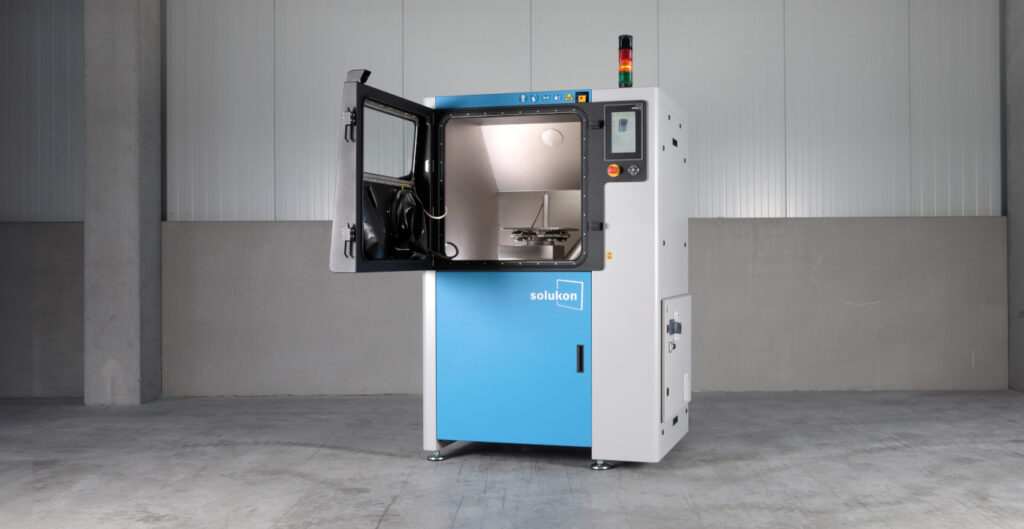
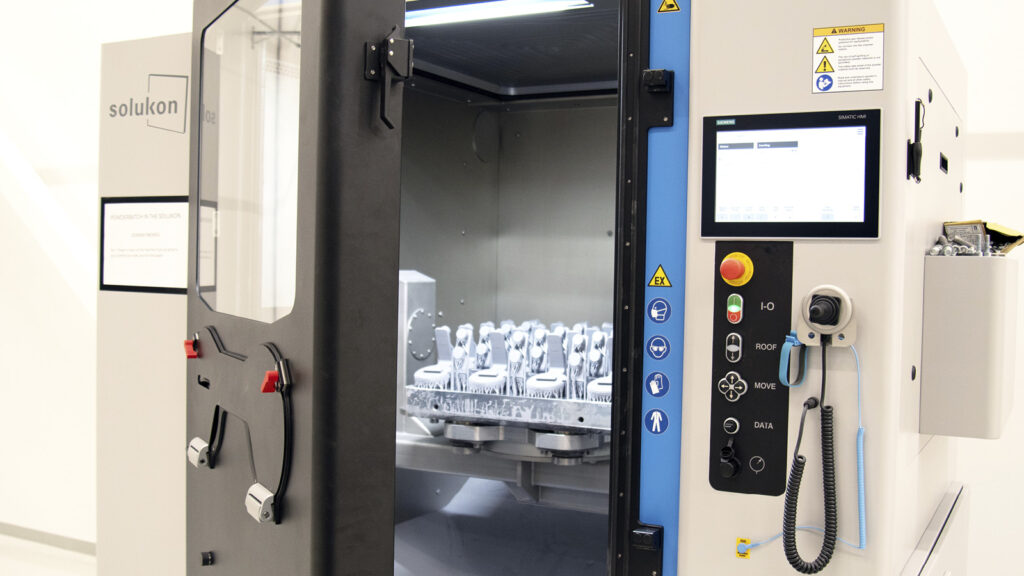
Cleaning components with ultra-high-frequency excitation has established itself as an effective alternative to conventional pneumatic excitation. Around two years ago, Solukon introduced the first series-production system featuring ultrasonic excitation.

Delivering excellent cleaning results, including for customers such as justairtech and The Exploration Company, this new excitation method has clearly proven its value. As a result, interest in ultrasonic solutions continues to grow, with an increasing number of enquiries from the market.

These are the advantages of ultrasonic depowdering:

1. Particularly gentle cleaning

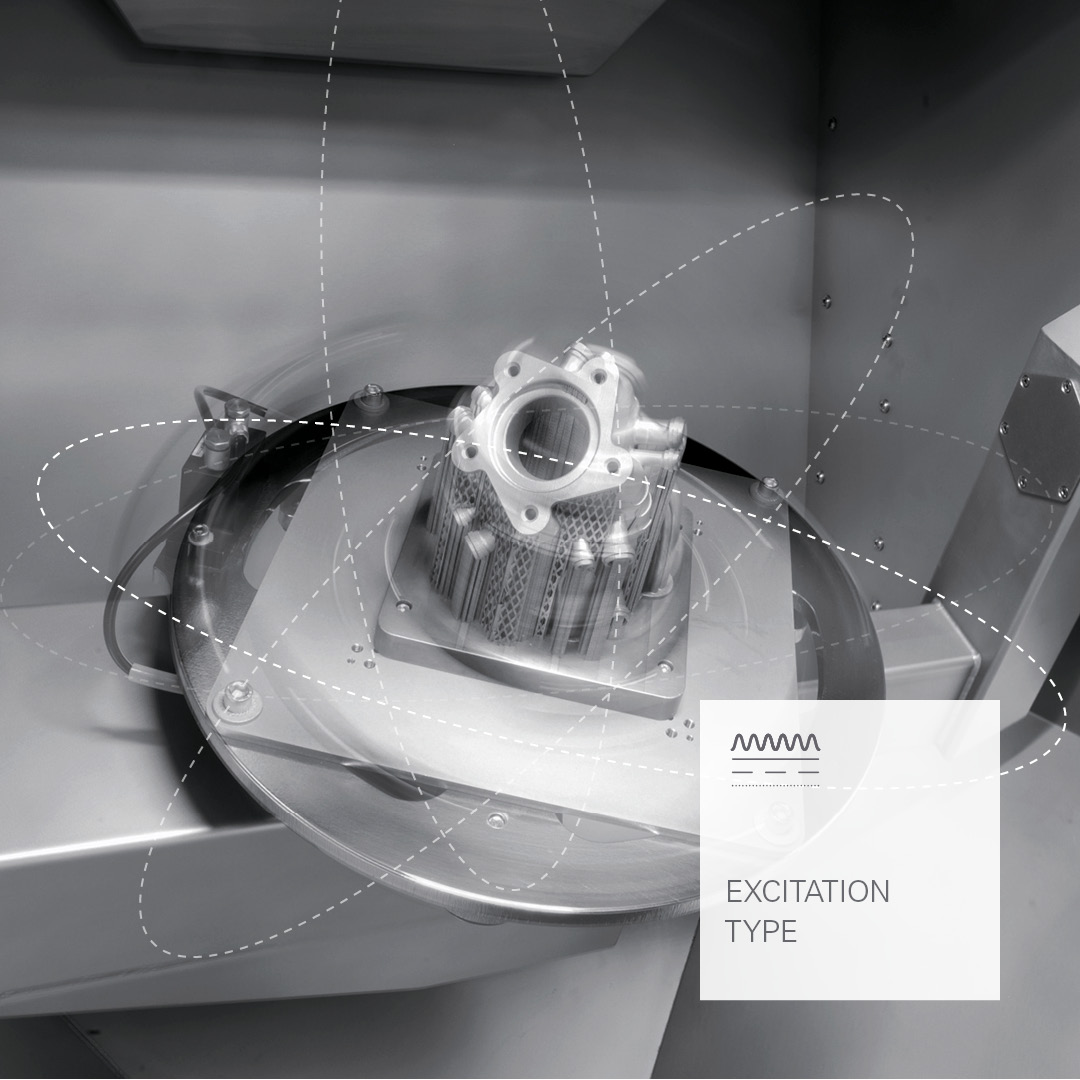
Piezoelectric excitation is applied directly to the turntable of the automated depowdering system, setting the component into optimal vibration with exceptional precision and minimal effort.

A key advantage of ultrasonic excitation is its variable frequency. Rather than operating at a single fixed frequency, the system continuously and rapidly cycles through a defined frequency range in which cleaning is most effective. This so-called sweeping process ensures highly reliable powder removal by targeting precisely controlled ultrasonic frequencies.

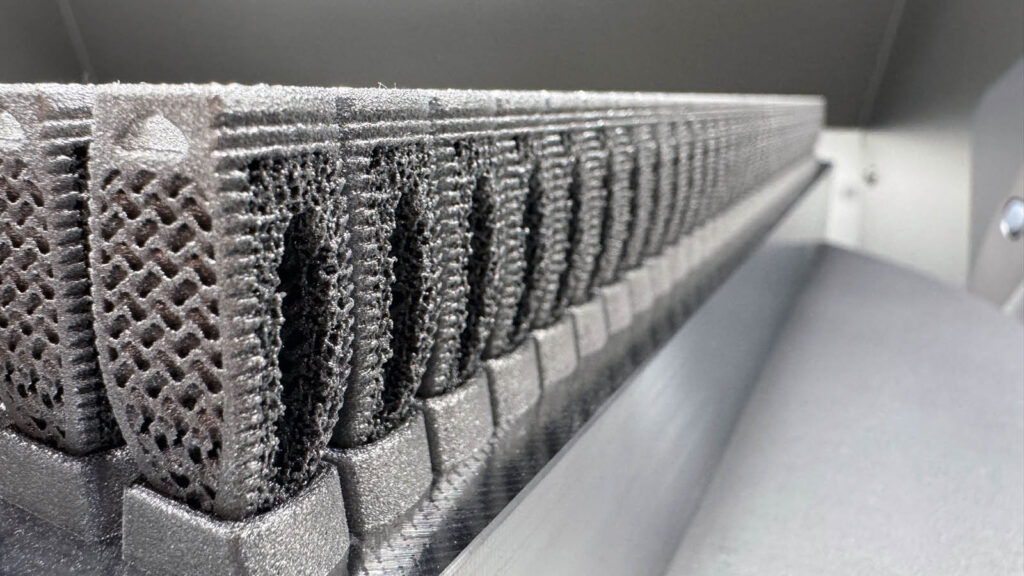
Because these ultra-high excitation frequencies are well above the component’s potentially harmful natural frequency, unwanted resonance is avoided. This prevents excessive vibration and protects the part from damage. As a result, automated ultrasonic depowdering is an especially gentle cleaning method, making it ideally suited for delicate structures such as lattice or sponge-like geometries used in medical technology.

2. Silent cleaning process

This can be a decisive advantage, particularly in otherwise noisy production environments: ultrasonic cleaning operates virtually silently.

3. Reliable loosening of powder clumps

Powder clumps may form inside components during the printing process as a result of moisture or insufficient excitation. This issue occurs most frequently in long, narrow internal channels. Ultrasonic excitation reliably breaks up and removes these clumps.

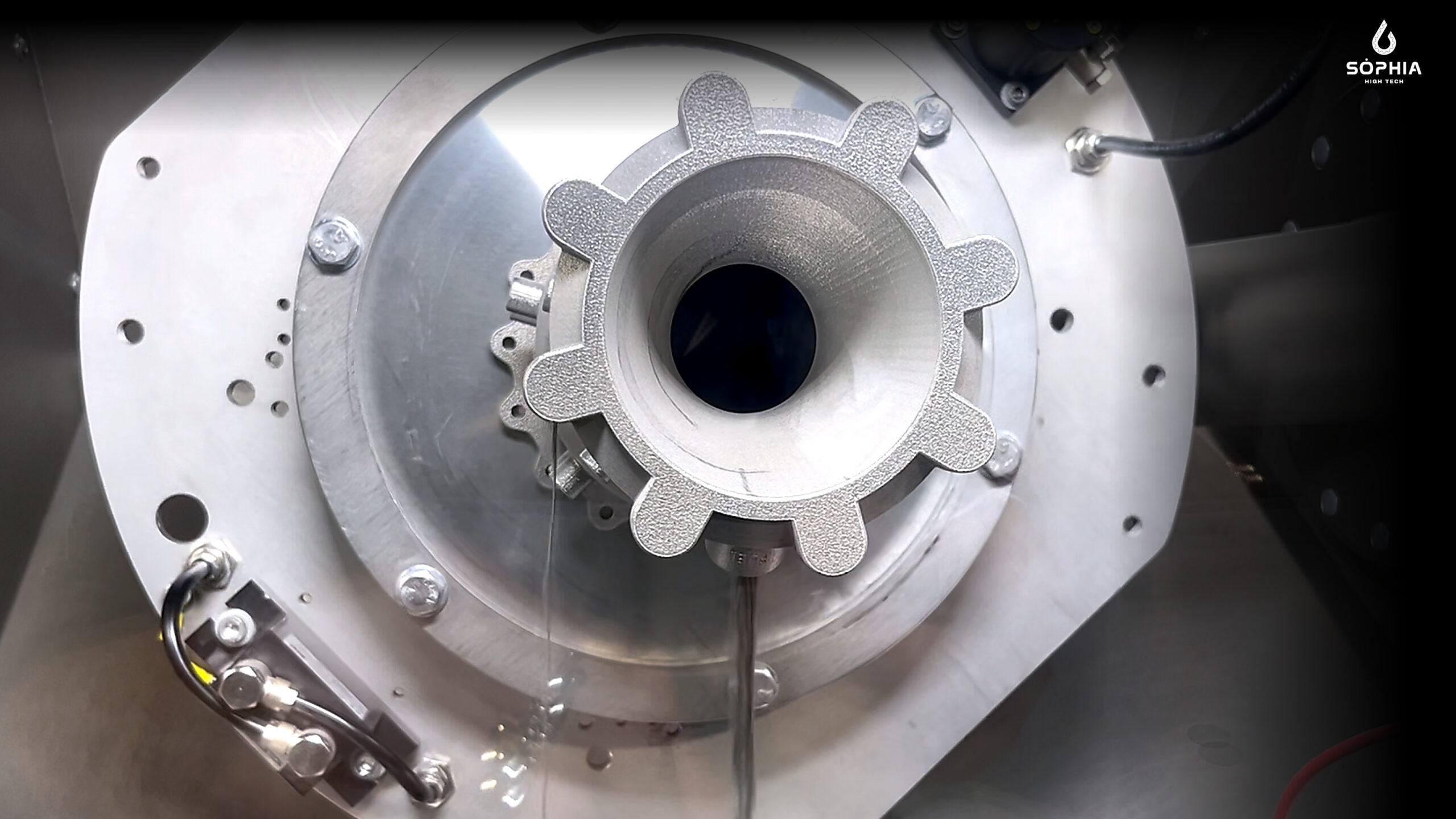
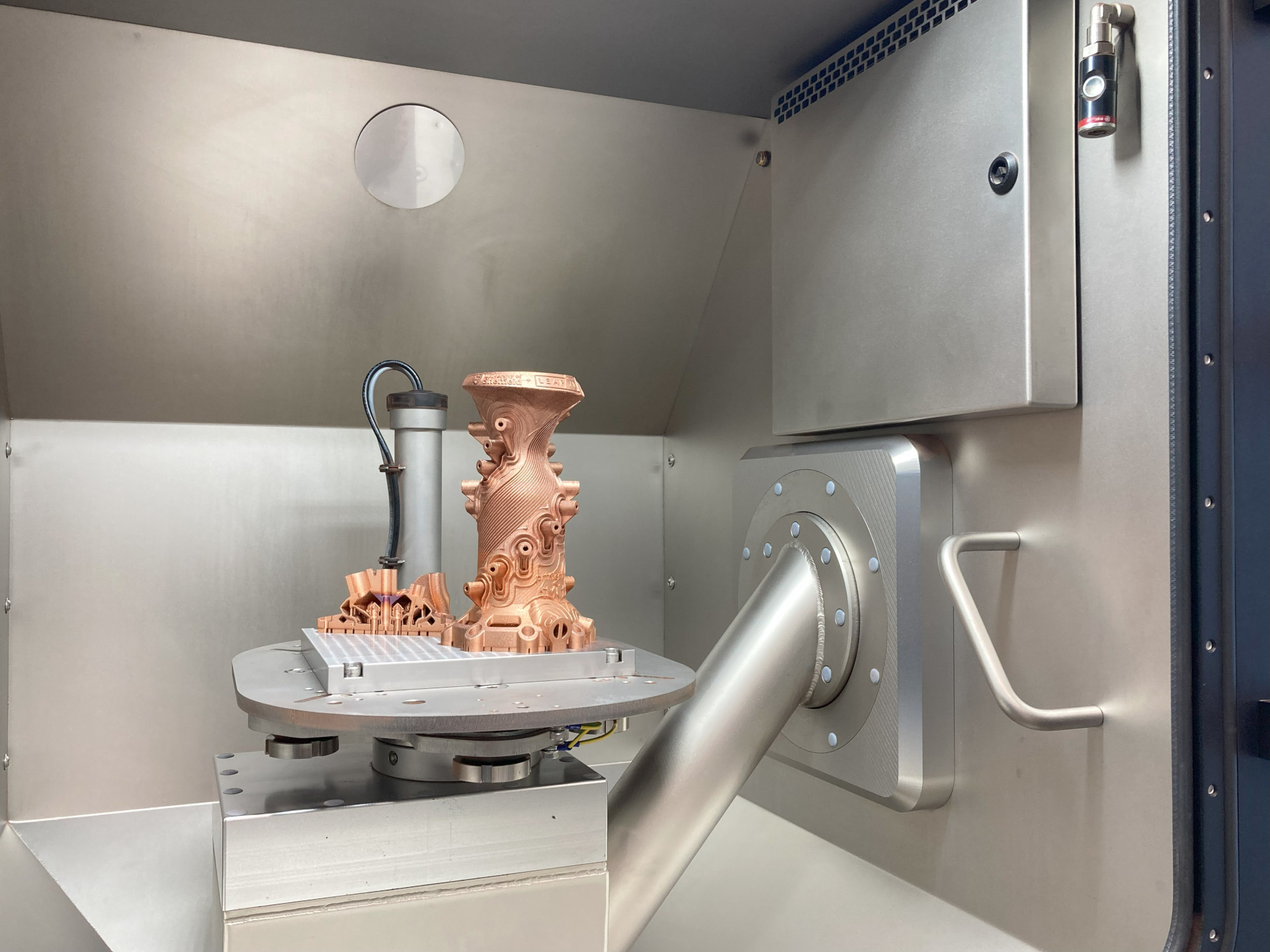
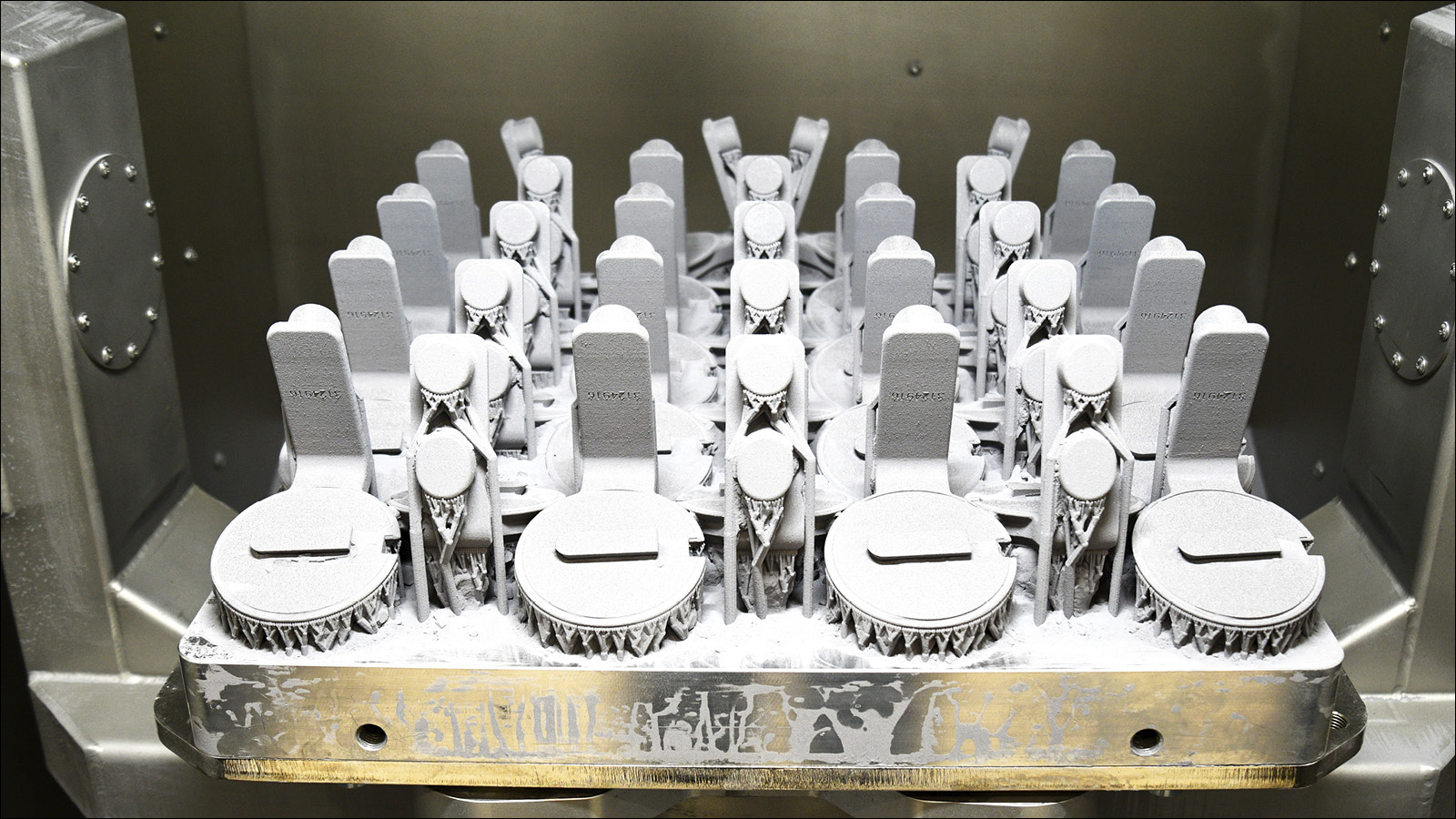
A copper part that was depowdered with ultrasonics.

Depowdering software and even more automation

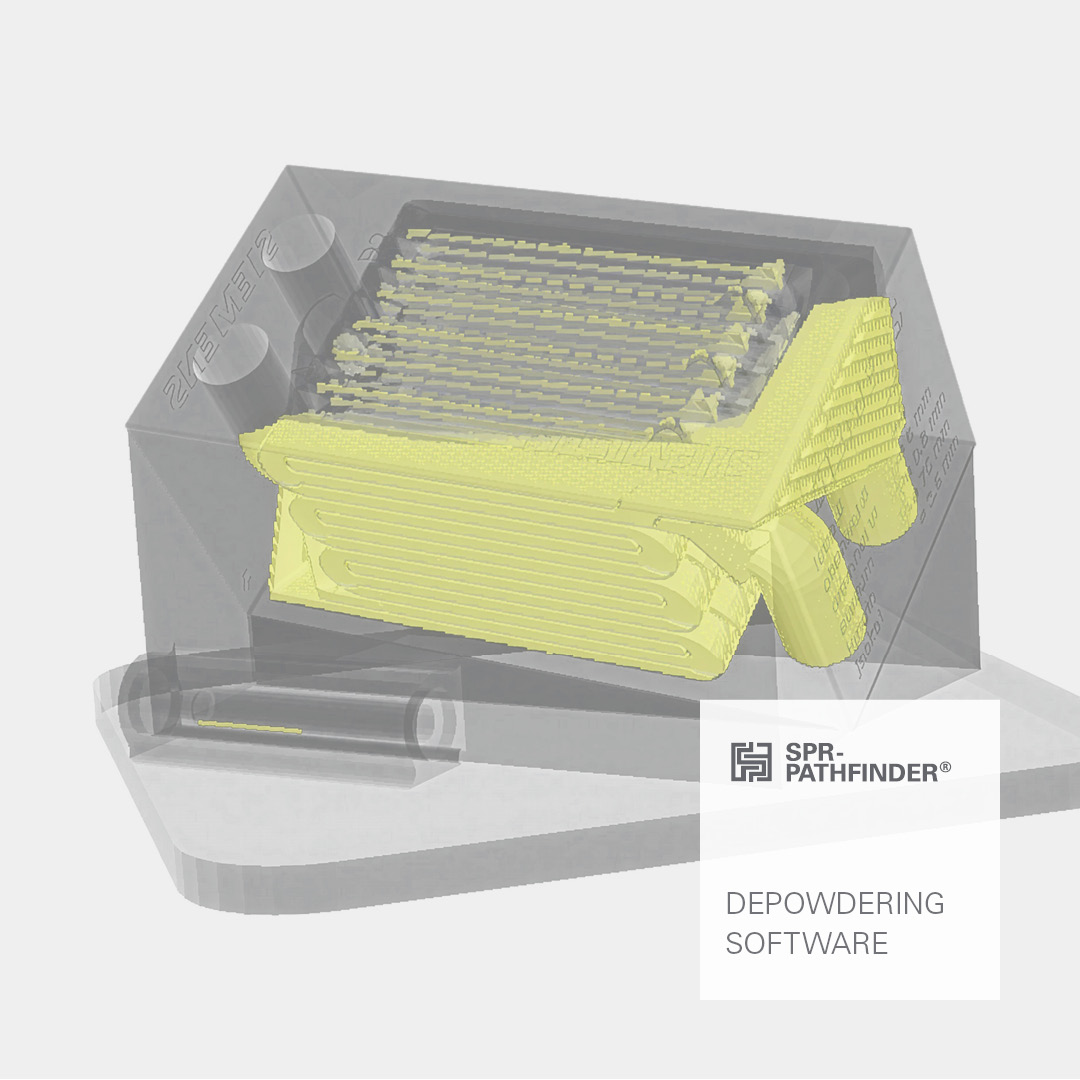
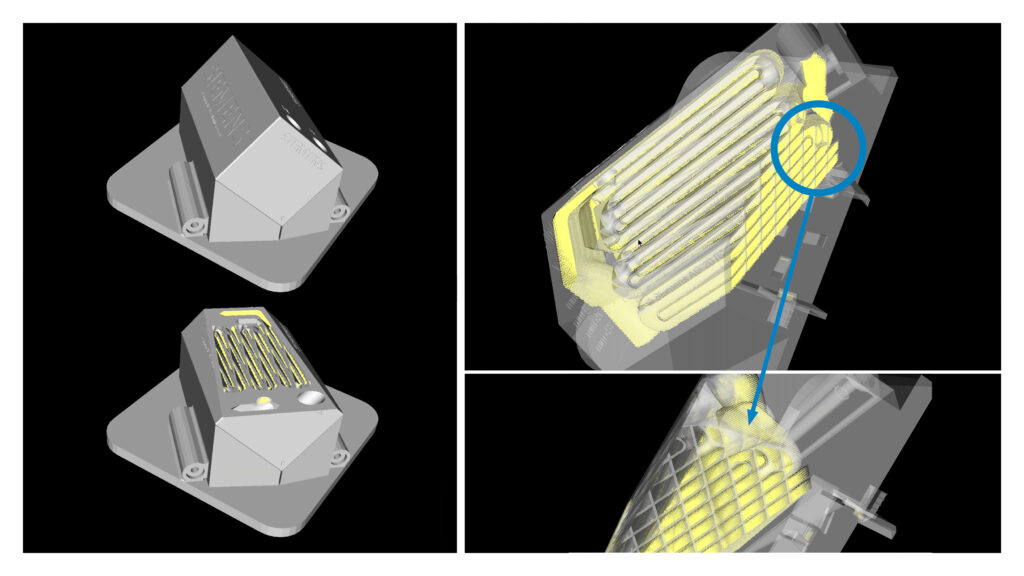
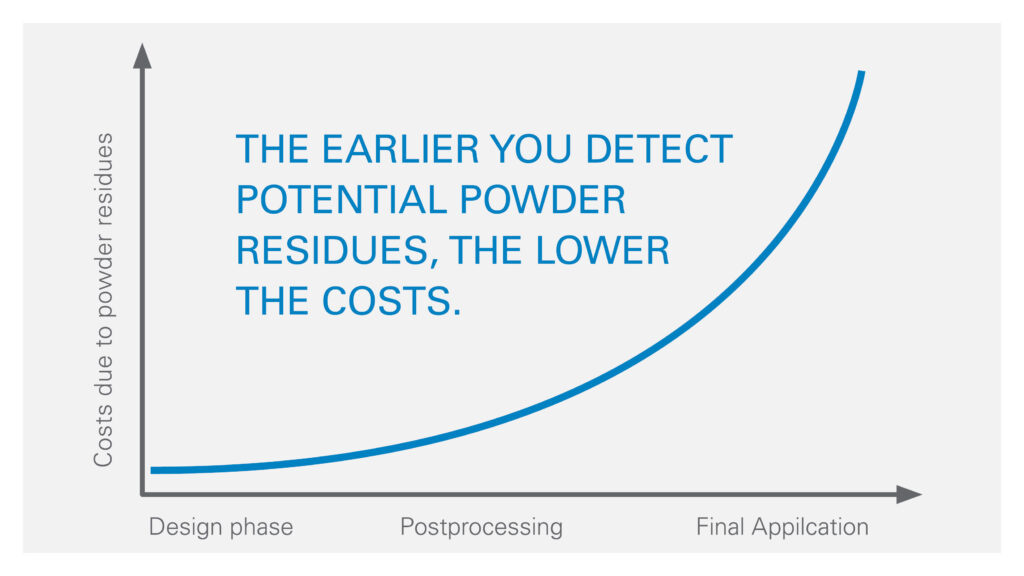
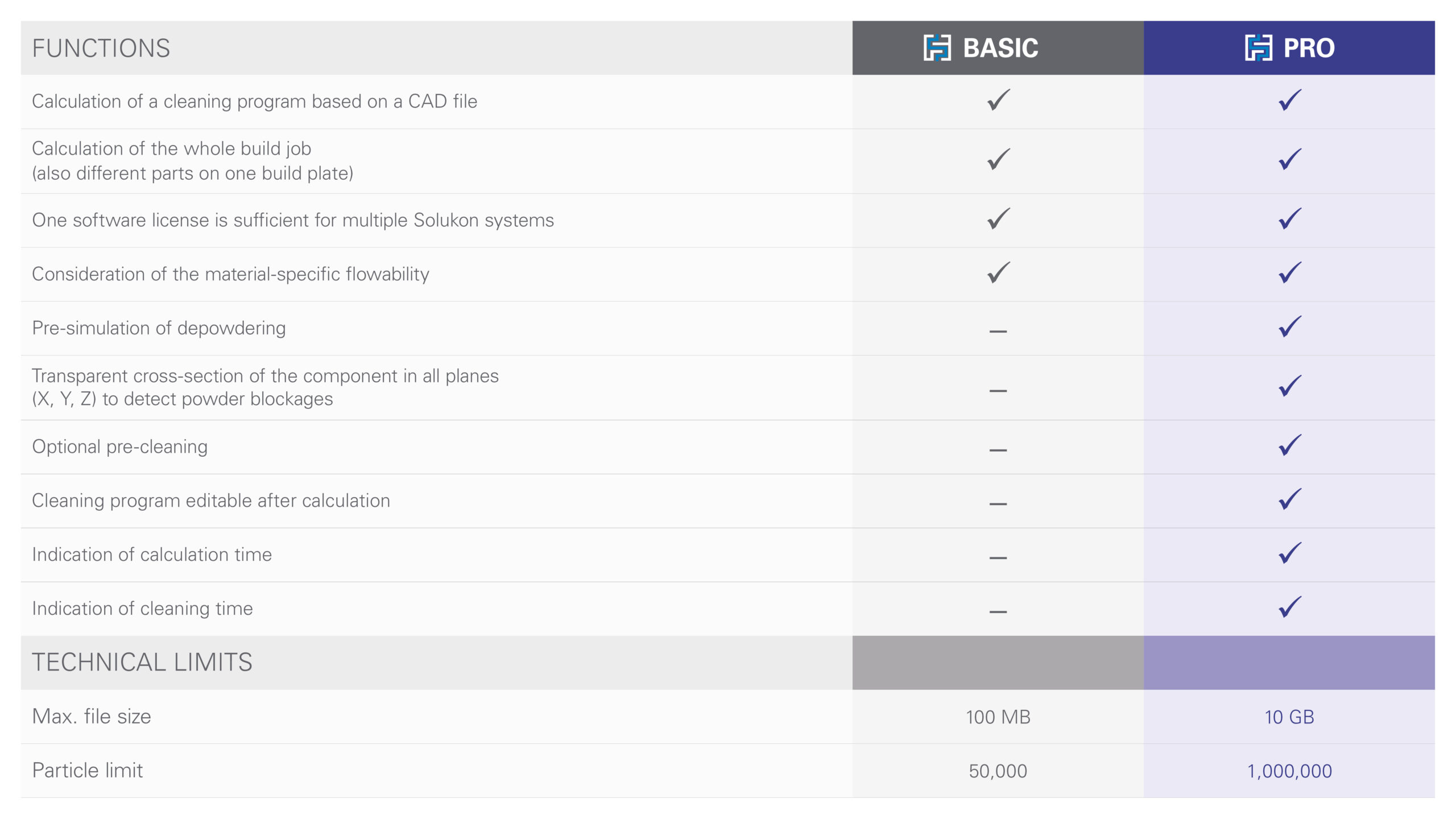
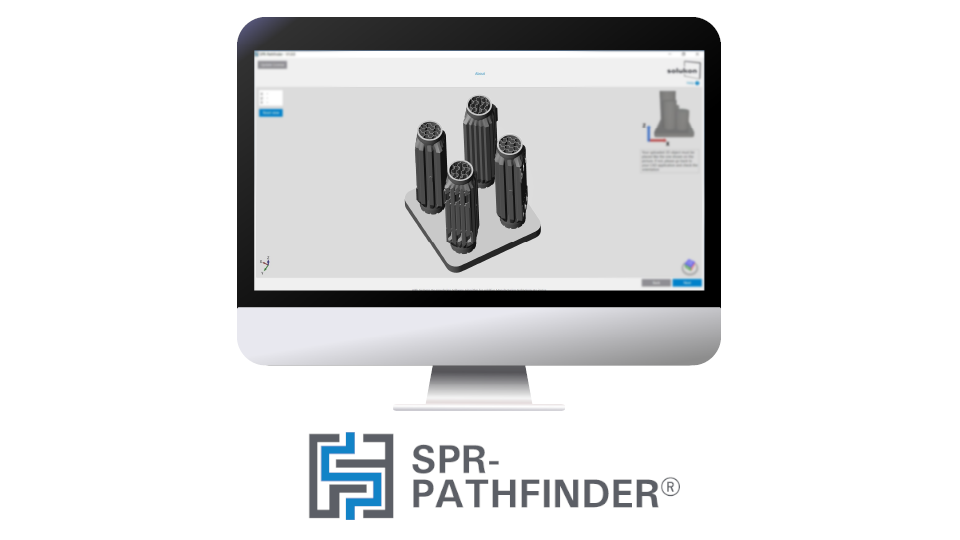
LPBF components are becoming increasingly complex, while a growing number of parts are moving into series production. Depowdering processes must keep pace with this evolution. Intelligent software that calculates the optimal movement sequence individually from the component’s CAD data enables reliable and repeatable depowdering which is an essential requirement for serial manufacturing and consistent cleaning quality. Software also allows cleanability to be assessed as early as the design phase, ensuring that complex geometries can be depowdered efficiently before production begins.

The rising demand for series production is closely linked to a growing need for further automation. In the field of depowdering, this opens up a range of customer-specific automation scenarios, including:

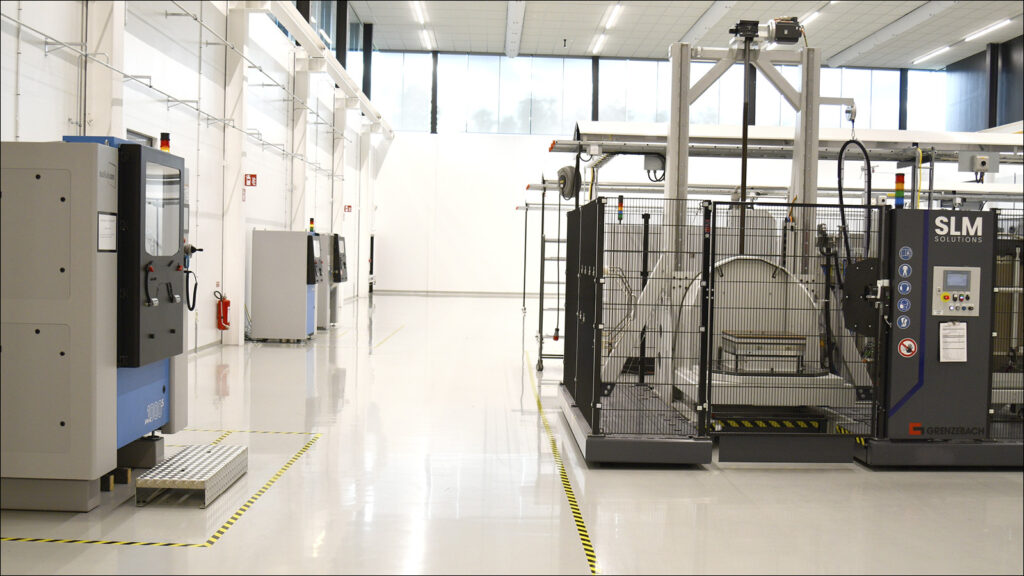
  • Automated loading and unloading of parts
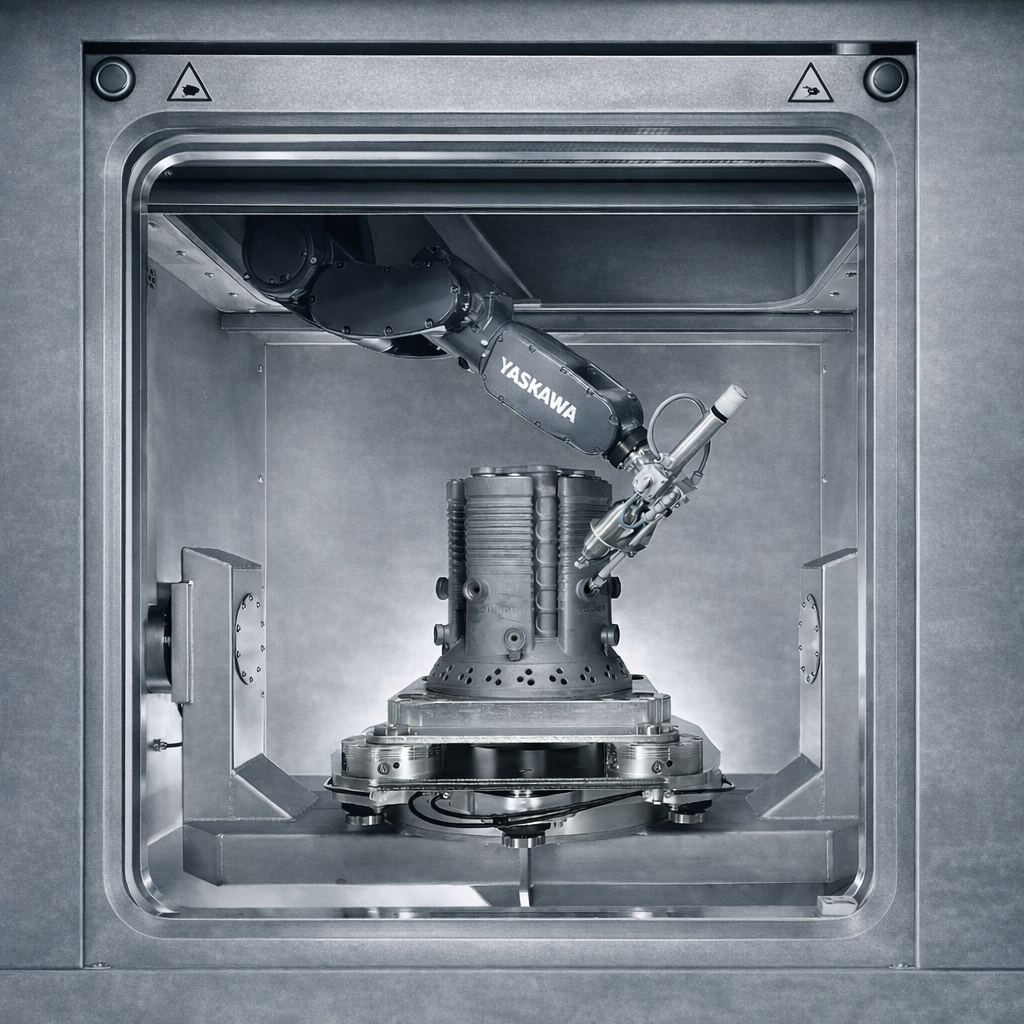
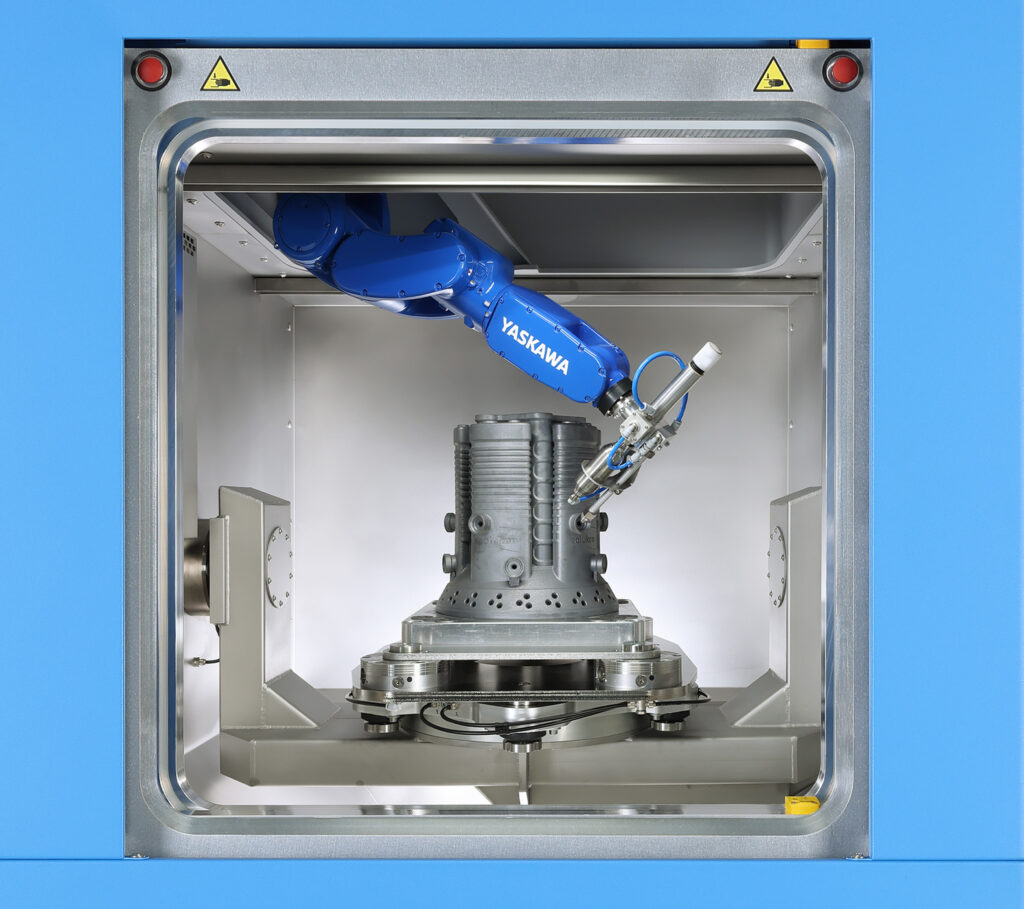
  • Robot integration into the depowdering system, enabling tasks such as removing residual powder, performing cleanliness inspections, or applying targeted mechanical excitation to loosen powder deposits

Together, these trends point to an exciting year ahead for industrial depowdering in 2026.

NEWS

Depowdering of laser-melted metal parts: AMEXCI expands postprocessing capabilities with two additional Solukon systems

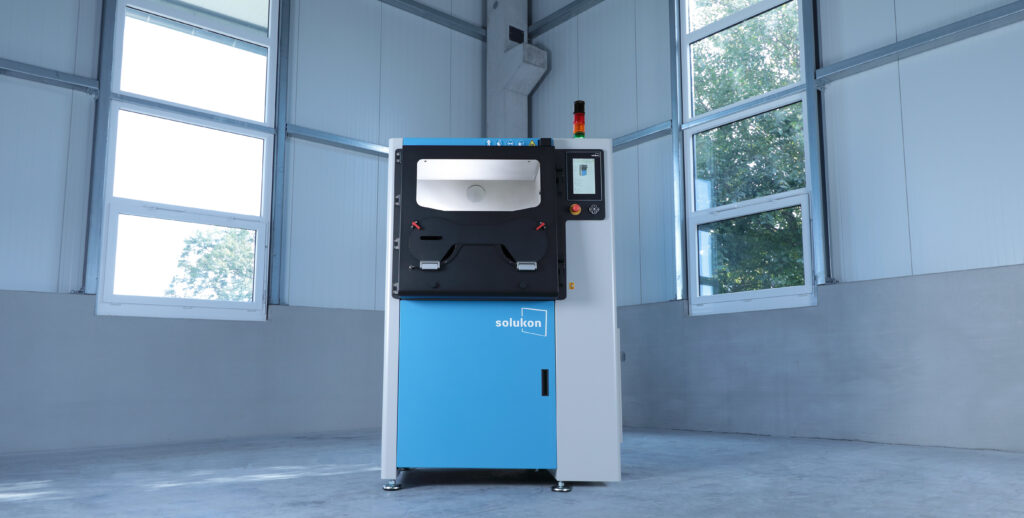
AMEXCI now has three Solukon powder removal systems in use at different locations.
January 14 2026

AMEXCI, a leading additive manufacturing company specialized in industrial metal 3D printing, has strengthened its additive manufacturing operations with the installation of two additional Solukon depowdering systems, the SFM-AT350 for medium-sized parts and the
SFM-AT1000-S for large LPBF parts. These new units join the company’s existing Solukon portfolio, building on a successful collaboration that began in 2018 with the purchase of an SFM-AT300 which continues to operate reliably to this day.

AlSi10Mg parts, printed on the NXG XII 600 system, depowdered in the SFM-AT1000-S by Solukon

QUICK FACTS

  • AMEXCI has purchased two further Solukon depowdering systems
  • For maximum process reliability, AMEXCI prefers single material use in their Solukon systems. The SFM-AT300 depowders components made of stainless steel (316l), the SFM-AT350 those made of titanium (Ti64), and the SFM-AT1000-S components of SLM printers made of aluminum (ALSI10Mg).
The Solukon systems at the AMEXCI facility

NEW DEPOWDERING SYSTEMS AS PERFECT-FIT ADDITION TO AM CENTER ÖREBRO

In May 2025 the service provider AMEXCI opened a new Additive Manufacturing facility in Örebro, Sweden. The new facility has been specifically designed to address growing requirements for efficiency, production capacity, and technological progress. With enhanced automation, improved material use, and shorter lead times, AMEXCI is now positioned to guide customers from early development through to full-scale serial manufacturing. For highest postprocessing demands the new Solukon depowdering systems SFM-AT350 and SFM-AT1000-S serve as a perfect-match addition to this high-end facility.

CONSISTENT DEPOWDERING PERFORMANCE FOR MULTI-PRINTER, MULTI-MATERIAL PRODUCTION

When using the depowdering systems, AMEXCI benefits from the universality of Solukon systems. With two EOS M290 systems and two Nikon SLM systems (SLM 500 and NXG 600), AMEXCI depowders components from three different printers from two manufacturers.

For maximum process reliability, AMEXCI prefers single material use in their Solukon systems. The SFM-AT300 depowders components made of stainless steel (316l), the SFM-AT350 those made of titanium (Ti64), and the SFM-AT1000-S components of SLM printers made of aluminum (ALSI10Mg).

Every LPBF build job is postprocessed in a Solukon depowdering system, partly followed by an ultrasonic washer.

Glimpse insight the SFM-AT1000-S at AMEXCI

WHY AMEXCI CHOSE SOLUKON’S AUTOMATED DEPOWDERING TECHNOLOGY

When asked about the significance of Solukon in their AM processes, Andreas Petersen, Head of Production at AMEXCI, commented: “The Solukon system has been an essential piece of our AM workflow from the beginning. We chose the Solukon as for us, it was important to work with powder free parts as early as possible in the process. It is an important equipment for us to get parts free of powder for safer handling of parts for both our operators and our customers. It is simple to use, yet efficient.  The cooperation with Solukon has been going well for 7 years now, with a team ready to help.”

WHAT’S NEXT WITH AMEXCI’S DEPOWDERING CAPABILITIES

Looking ahead, AMEXCI is evaluating the implementation of Solukon’s SPR-Pathfinder® software solution to further enhance efficiency. By digitally simulating optimal part motion based on the part-specific geometry, the company aims to improve depowdering predictability and streamline part-specific depowdering. This will help to remove powder from channels smaller than 1 mm, which currently still pose a major challenge, even more efficiently.

You are currently viewing a placeholder content from Vimeo. To access the actual content, click the button below. Please note that doing so will share data with third-party providers.

More Information
case
study

The advantages of software driven intelligent depowdering – use case Enerbine

The effect of SPR-Pathfinder® when removing powder from heat exchangers.

December 3 2025

INTRODUCTION

This case study features the automated depowdering process of a Heat Exchanger by company Enerbine.

Enerbine manufactures modular, fuel-agnostic inverter units designed for distributed power generation which are both compatible with liquid and gaseous fuels. Their technology combines cutting-edge 3D-metal printing with ceramic and advanced materials to deliver high precision, efficiency and durability. As an early adopter, Enerbine has been using SPR-Pathfinder® since installing the SFM-AT350 Solukon depowdering system at its plant.

In this case study, learn how Enerbine uses intelligent depowdering and how the company plans to further expand its depowdering capabilities.

The SFM-AT350: Depowdering of medium-sized metal parts

FACTS & FIGURES ABOUT THE
APPLICATION AND DEPOWDERING PROCESS

Build plate dimensions (W x D x H)200 x 200 x 350 mm
PrinterEOS M 400-4
MaterialIn718
ApplicationHeat Exchangers for power generation
Surface / structure– Cylinder with thin walls and fuel injector inside

– Curved channels inside the part which are approx. 200 mm tall in total

– 4 parts of the same shape on one build plate
Smallest diameter of internal feature filled with powder0.2 mm
Depowdering systemSolukon SFM-AT350 with high-frequent knocker
Duration of automated depowdering process360 min
Mode usedIntel Model with SPR-Pathfinder®
Number of cleaning steps1200
Amount of recovered powder per cleaning cycle10-20 kg
How many parts of this type are depowdered?12 a week

THE DEPOWDERING PROCESS

The depowdering process was carried out on the SFM-AT350 with a high-frequency knocker add-on.

During depowdering in Intel Mode with the SPR-Pathfinder®, a strong powder flow was detected. Targeted knocking helped loosen powder clogs in small part cavities (smallest size: 0.2 mm). Overall, the depowdering process for the heat exchangers in the SFM-AT350 took six hours. About 10-20 kg of powder could be collected for each depowdering cycle. Team Enerbine reuses the powder after sieving it for further printing processes.

After the depowdering process, Team Enerbine cut the parts open using an EDM. No powder residue was trapped inside the geometry. “Before we used the Solukon, powder was still trapped in the thin walls. Now, with the Solukon, only some dust remains on the walls”, says Erling LaSalle, Additive Manufacturing Engineer at Enerbine.

The depowdering process is followed by rinsing with IPA, heat treatment and machining.

SAFE PROCESS, LOW MAINTENANCE

Installing a Solukon depowdering system has significantly improved occupational health and safety because the powder is processed in a sealed atmosphere. The Solukon unit’s minimal maintenance requirements make it a valuable addition to Enerbine’s additive production facility, boosting efficiency.

THE ADVANTAGES OF DEPOWDERING WITH SPR-PATHFINDER® OVER CONVENTIONAL DEPOWDERING

Enerbine has found significant advantages in intelligent depowdering with SPR-Pathfinder®, which involves the precise precalculation of component movements based on the part geometry. Erling explains:

„Before we had the software, we set the program manually and ran it for 8 to 12 hours, but powder would still remain trapped inside the part. With the Pathfinder program, the process takes only 6 hours, and all the powder is completely removed.”

SPR-Pathfinder® is especially useful because the design of the heat exchanger is still being developed and changes slightly with each print. The software can quickly account for these minor changes to the component.

THE NEXT STAGE IN ENERBINE’S GROWTH IN INDUSTRIAL DEPOWDERING

Currently, the SFM-AT350 depowders up to four components on one build plate at a time. This will exceed the SFM-AT350’s maximum weight capacity soon, so Erling’s team plan to upgrade to the next largest Solukon depowdering system: the SFM-AT800-S. “We will need an SFM-AT800-S for full production setting”, Erling states.

NEWS

Nikon equips Nikon AM Technology Center Japan with Solukon depowdering system

Read here why Nikon opted for Solukon depowdering technology.

November 27 2025

End of February, Nikon Corporation (Nikon) has opened the research, development and service center for the highest AM requirements in Gyoda, Saitama Prefecture. For automated depowdering, Nikon once again relies on Solukon’s market-leading technology and integrates an SFM-AT1000-S into the center.

The Nikon AM Technology Center Japan (NAMTC Japan) with a total area of 922 m² is open to customers and interested parties from Japan and Asia and offers not only the premium printer NXG XII 600 from Nikon SLM Solutions AG but also a selection of leading postprocessing systems and measuring equipment. In the field of automated depowdering, Nikon relies on the market-leading technology from Solukon.

QUICK FACTS

  • Depowdering system SFM-AT1000-S in operation at NAMTC Japan
  • The system is the perfect postprocessing system for the high-end NXG XII 600 printer from Nikon SLM Solutions.
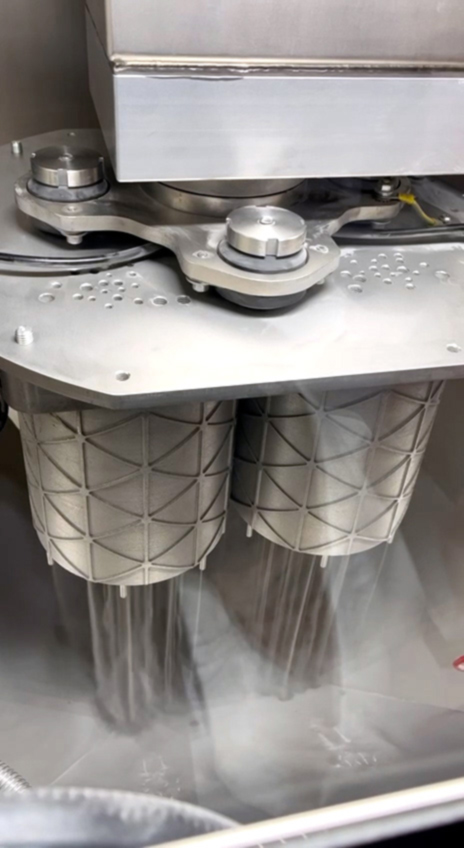
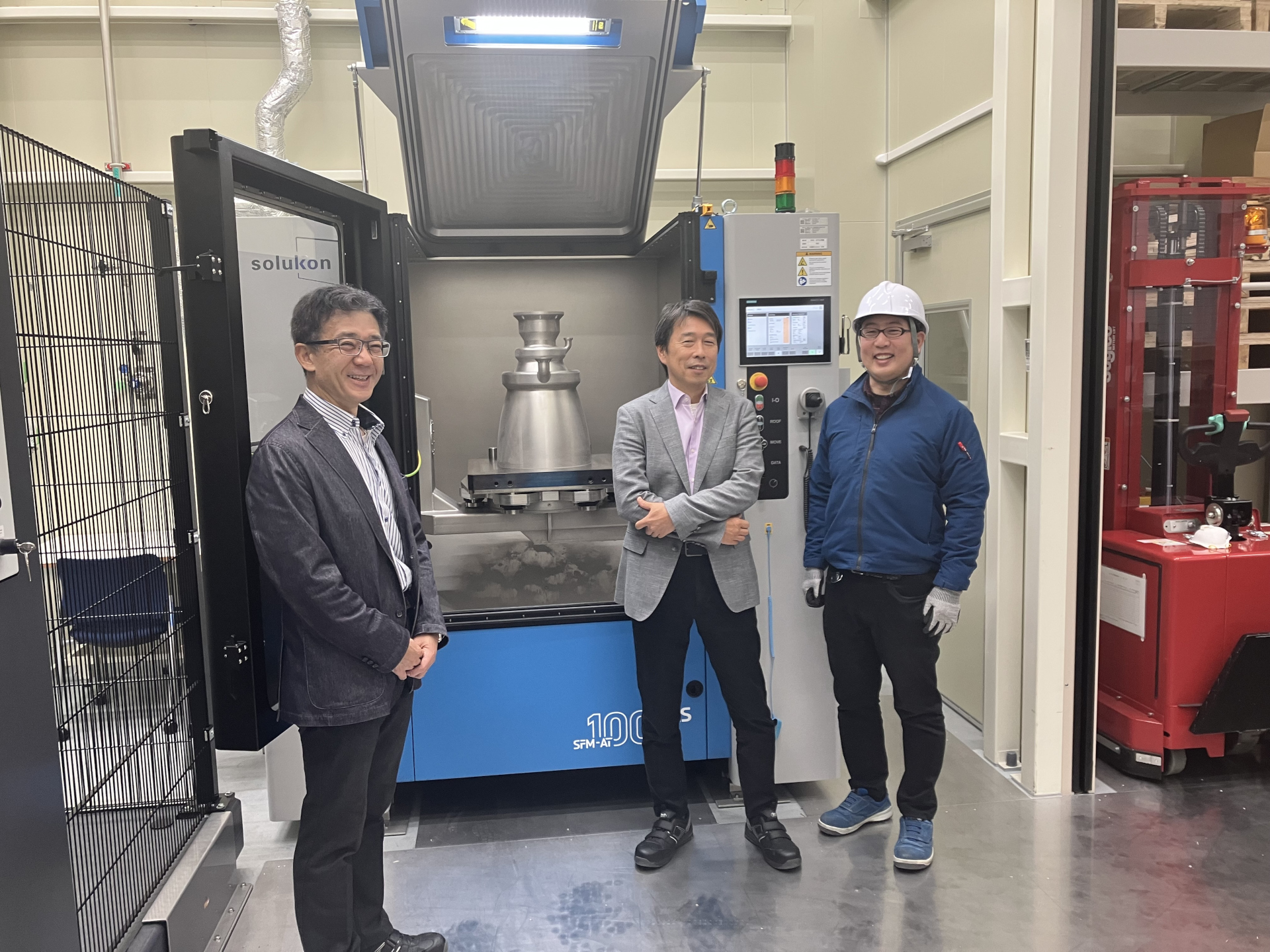
Depowdering system SFM-AT1000-S at NAMTC in Japan

THE SFM-AT1000-S AS A PERFECT FIT FOR THE NXG XII 600

The SFM-AT1000-S from Solukon is an automated powder removal system for large and heavy components weighing up to 800 kg. The SFM-AT1000-S version with a short swivel arm for a better center of gravity of the component was developed specifically for the NXG XII 600 large format printer from Nikon SLM Solutions (part dimensions max.: 600 x 600 x 600 mm). Therefore, the Solukon depowdering system fits perfectly into the machine setup at the NAMTC Japan in Gyoda. It also integrates seamlessly into the NAMTC Japan’s digital setup: The system is equipped with the Digital-Factory-Tool, a sensor and interface kit. It records all relevant data on the cleaning process and thus ensures maximum transparency. This data can be integrated into the higher-level digital dashboard of the printer landscape via OPC UA.

EFFICIENT AND REPEATABLE DEPOWDERING

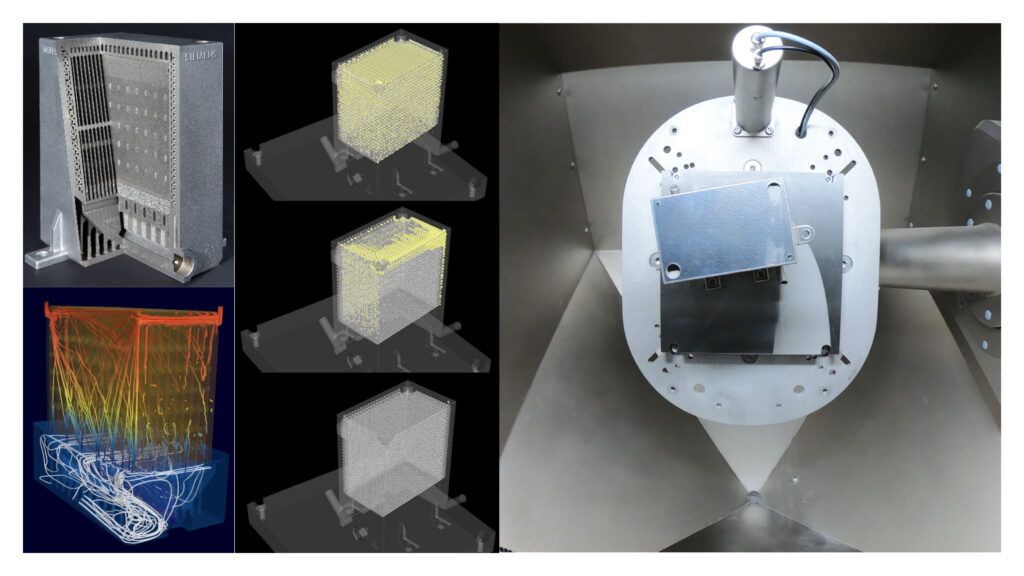
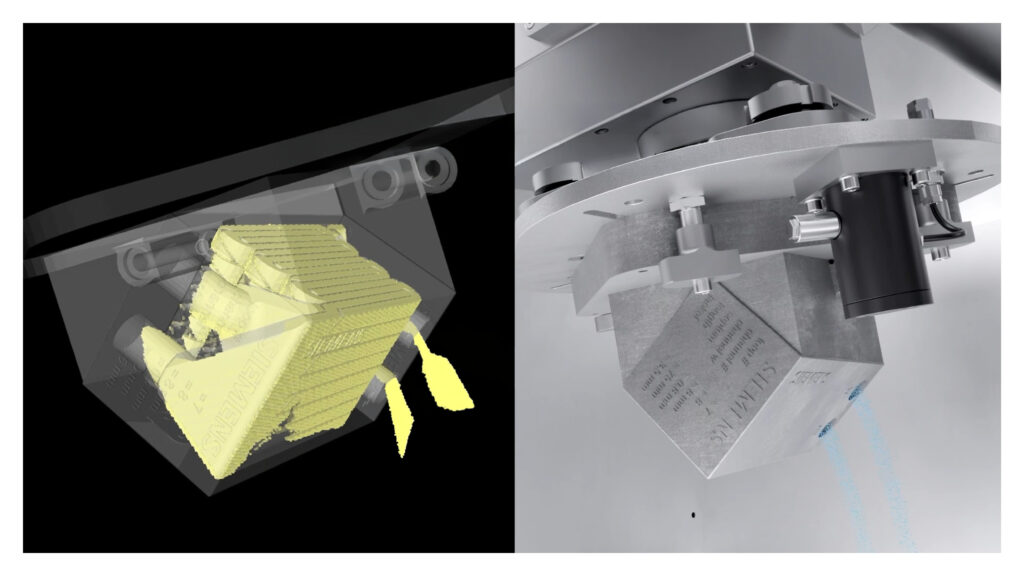
Nikon will produce complex components for the highest requirements in the NAMTC Japan. As the complexity of the parts increases (e.g. winded, internal channels), so do the requirements for automated depowdering. The SFM-AT1000-S was designed precisely for such challenges: it enables fully automated, programmable cleaning of complex structures and channels. In addition to the standard rotation and vibration, the SFM-AT1000-S at the NAMTC Japan is equipped with a specially developed high-frequency knocker. This loosens powder clogs in component channels through targeted knocking without damaging the component. The SPR-Pathfinder® software makes it easy to calculate how the 3D-printed part needs to be moved in the Solukon system. It analyzes the CAD file of the component and calculates the ideal movement pattern. This calculation can take place as soon as the CAD file of the component has been created. Users can therefore simulate depowdering during the design process and see whether their geometry can be depowdered.

WHY NIKON HAS OPTED FOR SOLUKON TECHNOLOGY

These intelligent features make the Solukon SFM-AT1000-S the perfect postprocessing system at the NAMTC Japan. “Our aim is to offer our customers and interested parties the highest quality equipment in the NAMTC Japan. Solukon systems stand for the highest quality and reliability, so it is only logical that we chose a Solukon system for automated postprocessing,” says Hiroyuki Nagasaka, Assistant General Manager Advanced Manufacturing Business Unit at Nikon.

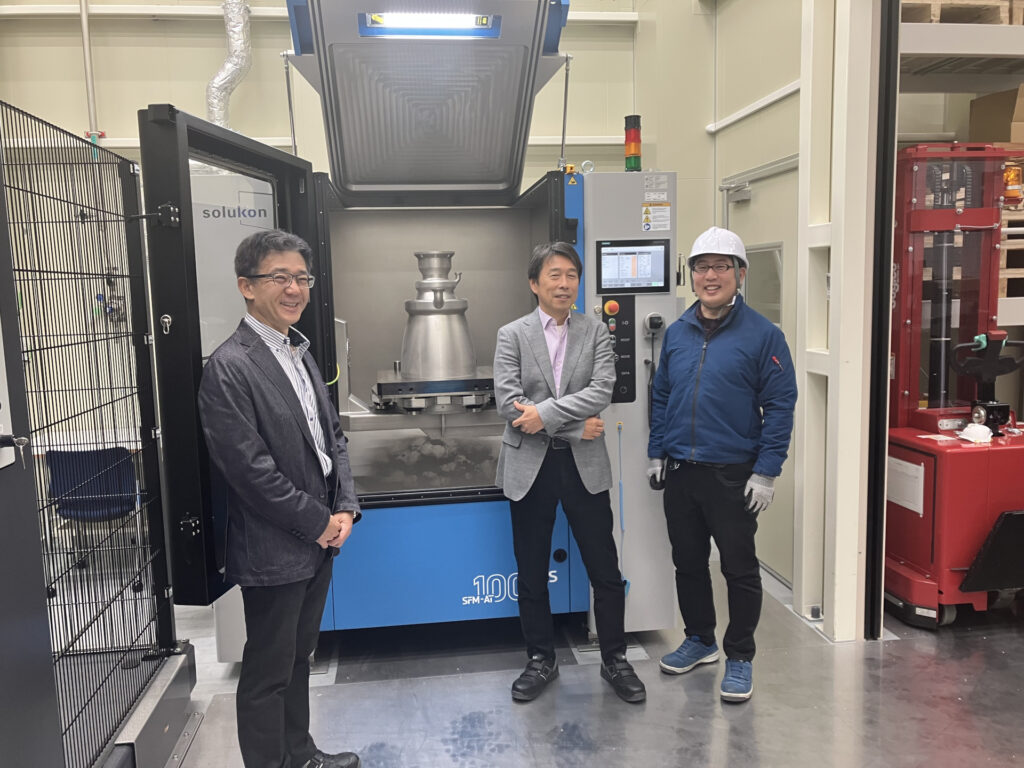
Hiroyuki Nagasaka (Assistant General Manager Advanced Manufacturing Business Unit), Yuichi Shibazaki (General Manager Advanced Manufacturing Business Unit und Director & Co-President & Co-CEO of Nikon Advanced Manufacturing Inc., Officer in charge of Riblet Solution Development Department) and Yuki Furuya (Staff, Advanced Engineering Section, Business Planning Department Advanced Manufacturing Business Unit) (f.l.t.r.) in front of the depowdering SFM-AT1000-S at NAMTC Japan.
NEWS

Solukon at Formnext 2025: What to expect

Learn here what we’ll showcase at the most important trade show of the year.

October 27 2025

Formnext time is the most exciting of the year. Learn what we will show at the world’s biggest event for industrial 3D printing in Frankfurt, Germany.

SHORT CUT: WHAT WE HAVE AT DISPLAY

  • Special version of the SFM-AT800-S with automated part transport and robotic finishing
  • SFM-AT350-E: Gentle and silent depowdering with ultrasonics

SFM-AT800-S SPECIAL VERSION

At this year’s Formnext, we are proud to present a special edition of our anniversary machine, the SFM-AT800-S. This exclusive variant showcases automated part transport and depowdering combined with robotic finishing. Proudly presented together with our renowned technology partners Grenzebach and Yaskawa, this innovation marks a significant step toward even greater efficiency and automation in depowdering and post-processing workflows.

SFM-AT350-E

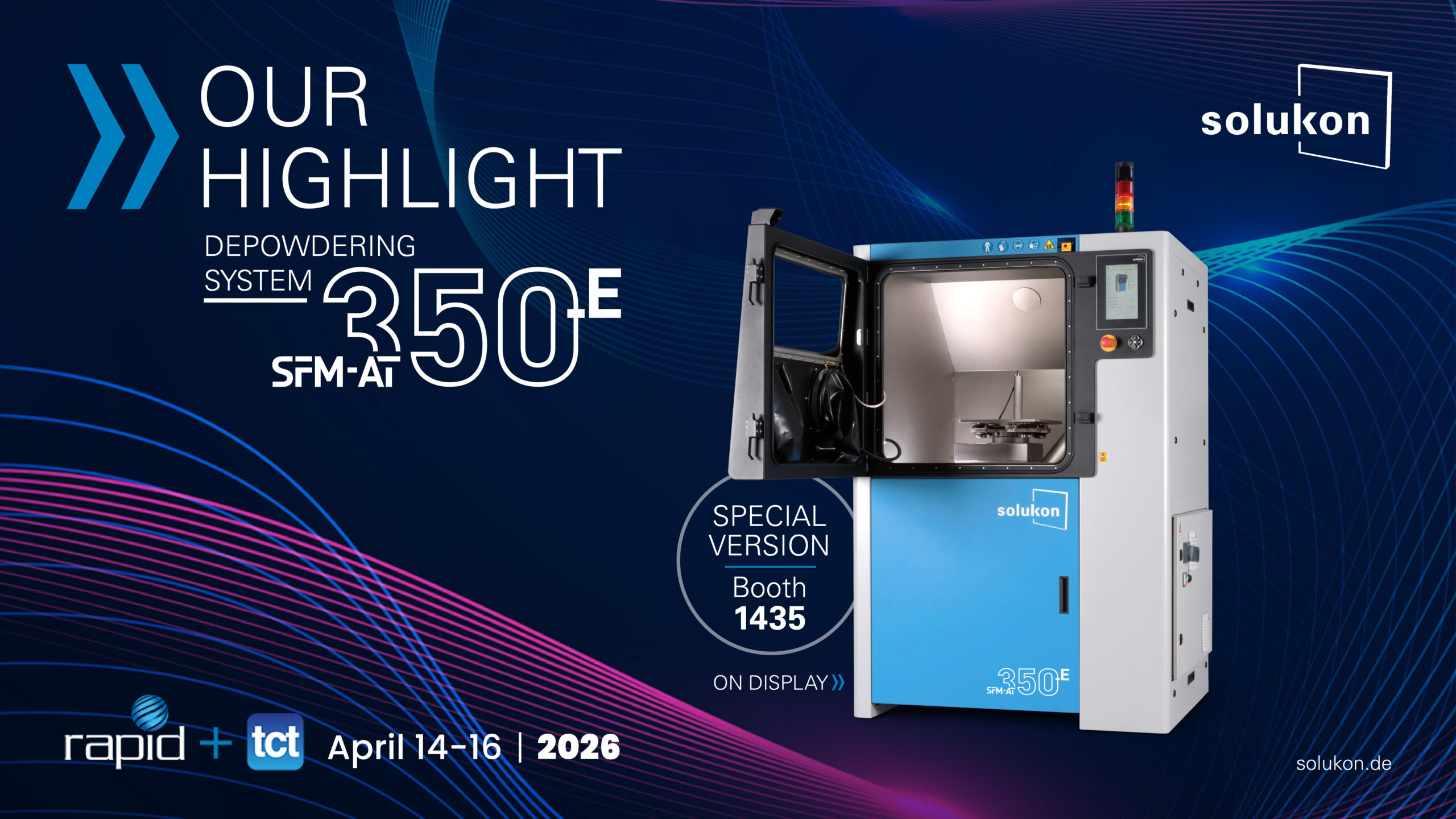
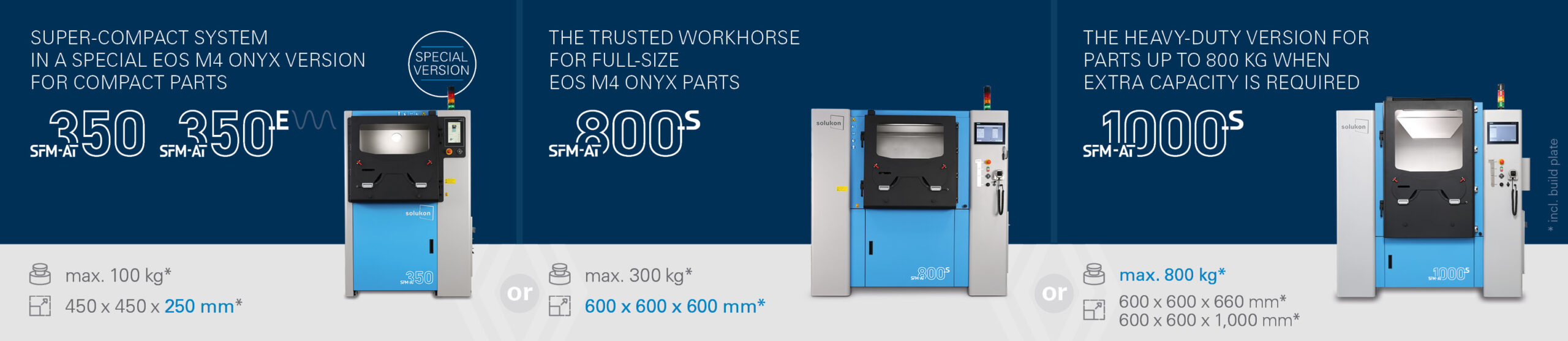
Our top-selling depowdering system, the SFM-AT350-E will also be on display. The E-version enables gentle and silent depowdering with ultrasonic excitation for delicate geometries. Thanks to its adapted arm design, the SFM-AT350/-E can accommodate parts weighing up to 100 kg as well as plates of the flagship printers EOS M 400 and Nikon SLM® 500.

Get your Solukon Anniversary Package

We’re celebrating Solukon’s 10th anniversary, and we want you to join the fun at Formnext 2025.
Be one of the first 50 visitors to receive our exclusive anniversary package:

  1. Visit our booth 12.0, D71 at Formnext.
  2. Take a photo with our team in the anniversary frame.
  3. Grant permission for us to use your photo for LinkedIn posts during and after Formnext 2025.

Once you’ve done that, your special anniversary package is yours to take home.
Only 50 packages available!

NEWS

Conflux Technology Strengthens Advanced Manufacturing Capabilities with Solukon Depowdering System

From Augsburg to Australia: Learn why Conflux Technology chose a Solukon depowdering system for efficient postprocessing.

September 24 2025

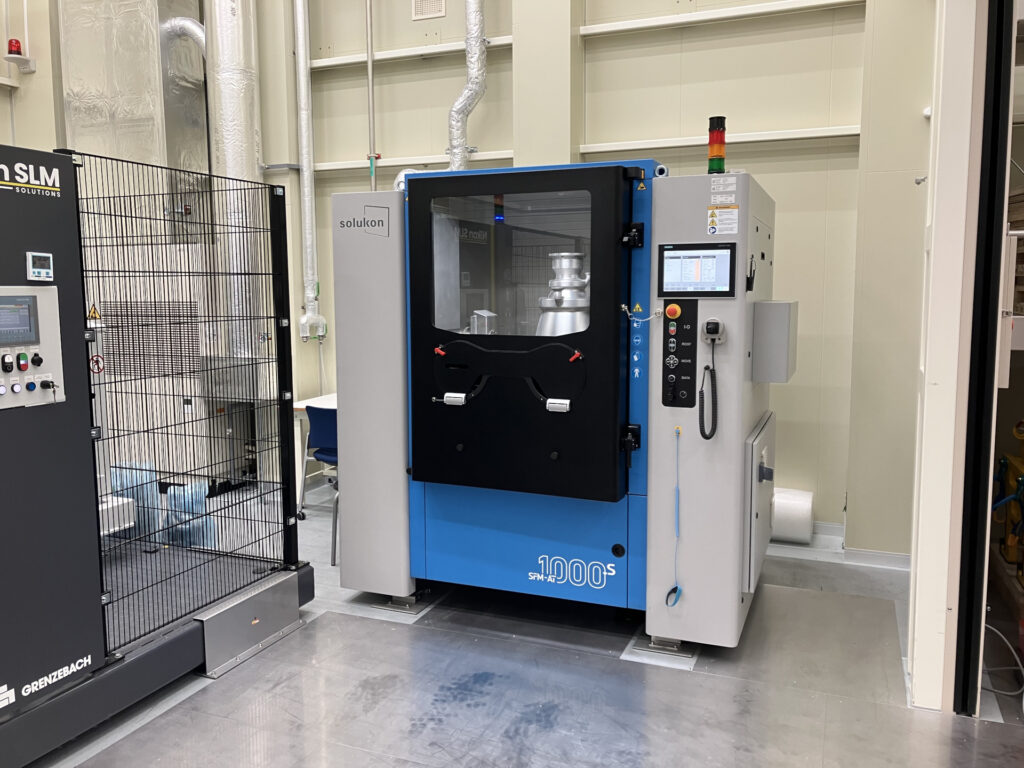
Conflux Technology, a global leader in heat exchange solutions produced using additive manufacturing and headquartered in Geelong, Australia, has further strengthened its production ecosystem with the integration of Solukon’s advanced depowdering system and peripheral equipment, including the SFM-AT800-S and SFM-PCU.

THE FACTS

  • Conflux installs SFM-AT800-S and SFM-PCU
  • Enhanced production reliability: Solukon depowdering removes variability from manual processes, increases operator safety, and ensures consistent quality.
  • Seamless collaboration with Solukon, marked by responsive support and a shared drive for innovation.
Powder Collection Unit SFM-PCU

EFFICIENT HEAT EXCHANGER DEPOWDERING

As Conflux continues to scale production to serve the demanding needs of aerospace, automotive, space, and industrial sectors, Conflux has secured Solukon’s SFM-AT800-S system, which ensures safe, automated, and repeatable depowdering of Conflux’s high-performance heat exchangers.

SFM-AT800-S and SFM-PCU SPOTLIGHT

The SFM-AT800-S is an automated depowdering system designed for complex metal components with a height of up to 600 millimeters. This cutting-edge solution enables fully automated and highly efficient depowdering of even the smallest internal channels of complex parts. By combining programmable, unlimited two-axis rotation with vibration in a controlled atmosphere, the system ensures thorough powder removal. These features make the SFM-AT800-S is also the world’s best-selling depowdering system.

To complete its depowdering ecosystem, Conflux selected the SFM-PCU powder collection unit for its closed-loop, fully automated recovery capabilities. By safely managing reactive powders, the system enhances operator protection, improves efficiency, and ensures reliable material reuse supporting high-volume, serial production at scale.

WHY CONFLUX OPTED FOR SOLUKON

“The Solukon SFM-AT800-S is integral to our ability to process highly complex geometries efficiently and reliably,” said Dr. Ian Fordyce, Head of R&D at Conflux Technology. “It eliminates the variability of manual processes, improves operator safety, and ensures consistent quality across production. Our cooperation with Solukon has been seamless, with responsive support and a shared commitment to innovation.”

The system’s high-frequency knocking capability has proven particularly critical in clearing residual and compacted powder from Conflux’s intricate fin structures and channels. This accelerates cleaning cycles while protecting the thermal and fluid performance of finished components.

Conflux Technology’s Geelong facility is dedicated exclusively to thermal management innovation. With expertise in manufacturing heat exchangers from aluminium, stainless steel, and nickel-based alloys, Conflux provides end-to-end design, prototyping, additive manufacturing, advanced depowdering, and rigorous validation. This specialized focus enables Conflux to deliver thermal solutions with performance well beyond conventional designs.
NEWS

10 Years of Solukon

Our customers and partners answer our questions about Solukon.

August 18 2025

We’re celebrating our 10th anniversary this year. As part of the occasion, we asked our customers and partners 10 questions about Solukon.

Here is a selection of their responses. Enjoy reading!
case
study

Automated depowdering with ultrasonics – Use case justairtech

Learn in this case study for which geometries ultra-high frequencies can make a difference for depowdering.

August 5 2025

INTRODUCTION

For nearly a decade automated depowdering was widely understood as the combination of automated rotation and targeted vibration. This is still the case but with the launch of the depowdering system SFM-AT350-E Solukon has extended the vibration options with ultrasonic excitation. This case study features the ultrasonic depowdering process of a Fractal Heat Exchanger by justairtech.

The company develops and provides sustainable, highly efficient cooling systems that use air as a refrigerant, primarily targeting data centers and industrial cooling needs. The use case part, their fractal heat exchanger, is their core technology, enabling the use of air as a refrigerant and achieving 4-5 times higher efficiency than conventional systems. They aim to decouple cooling from climate change by reducing electricity consumption and using natural refrigerants.

FACTS & FIGURES ABOUT THE
APPLICATION AND DEPOWDERING PROCESS

Build plate dimensions (W x D x H)350 x 350 x 350 mm
Printer with which the part was manufacturedEOS M 400-4
MaterialEOS Stainless Steel 316L
ApplicationFractal Heat Exchanger
Structure / surface– Complex internal geometry with many horizontally running, long and narrow channels; Channel opennings of various geometrical
shapes

– Spread over the entire base area, approximately halfway up: an
area (100 – 150 mm high) in which there is a vertical grid with
extremely small gaps (“channels” of 0.5 x 0.5 mm).
Smallest diameter of internal feature0.5 x 0.5 mm
Duration of automatic depowdering337 min
Depowdering systemSolukon SFM-AT350-E with ultrasonic excitation
Mode usedAutomatic Mode + Manual Mode

THE DEPOWDERING PROCESS

Before the ultrasonic depowdering process in the SFM-AT350-E a pre-cleaning has already been conducted. There was a period of time between the first and second cleaning during which the component was exposed to normal room air. It can therefore be assumed that the powder remaining inside the part reacted with moisture from the surrounding air, which further complicated the depowdering process. The depowdering process was carried out on the SFM-AT350-E with permanent ultrasonic excitation and without an option for a pneumatic vibrator or high frequent knocker. During the depowdering also a high impact blasting gun was used to additionally loosen the powder and to get even more powder out of the part. During depowdering in automatic mode (swiveling angle 60°-220°, rotating and swiveling speed 10°/s with waiting times of 5 seconds in each position) a strong powder flow was detected. All in all the ultrasonic depowdering process of this Fractal Heat Exchanger on the Solukon SFM-AT350-E took 337 minutes. Despite pre-cleaning, more than 1.9 kg of stainless steel powder that had attached could be removed. The Heat Exchanger is now completely depowdered.

WHAT IS THE RESULT OF THIS USE CASE?

This use case clearly demonstrates that ultrasonic excitation can make a significant difference when dealing with narrow, long channels. Considerably more powder was removed compared to conventional pre-cleaning using vibration and knocking. Ultrasonic cleaning with the SFM-AT350-E is another powerful tool in Solukon’s comprehensive industrial depowdering toolbox. However, the choice of excitation method still heavily depends on the geometry of the part.

WHAT CONCLUSIONS DOES JUSTAIRTECH DRAW FROM THE POWDER REMOVAL TEST?

“The powder removal test impressively confirmed that even powder that gets stuck in component areas that are extremely difficult to access – in our case over 1.9 kg – can be removed automatically. The comparison with the target weight of the heat exchanger shows that the test with Solukon was extremely successful and that the component is now free of powder. This not only provides us with the necessary process reliability, but also strengthens our confidence in the industrial series application of additively manufactured components.”

Philipp Komurka,
Head of Product Development & Technology
Additive Components & Testing

NEWS

Ultrasonic depowdering: A new tool in the industrial powder removal toolbox

Learn why ultrasonic depowdering can be a game-changer and when the excitation form is the right choice for your application.

July 4 2025

THE PRINCIPLES FOR AUTOMATED DEPOWDERING:

Automated depowdering is a relatively new discipline in additive manufacturing and still: since Solukon was founded and the world’s first depowdering system, the SFM-AT800-S, was launched in 2015, a number of successful principles have become established on the market. The most important of these include:

1. Depowdering must take place in a protected atmosphere

Health risks from fine dust and the danger of explosions are effectively controlled only when using a sealed process chamber. For reactive materials, the process chamber is inerted with a protective gas.

2. Depowdering must be reproducible

This means achieving consistent cleaning results for identical components (i.e., repeatability). What may sound obvious or like a no-brainer is actually a standard that can only truly be maintained with automated powder removal using Solukon.

3. The best cleaning result is achieved through the combination of rotation and vibration excitation

(Endless) rotation around two axes and targeted vibration excitation make the adhering powder flowable within internal channels. The excitation intensity of the vibrator can be adjusted in Solukon’s powder removal systems. However, how the pneumatically generated vibrations actually act on the part is highly individual and depends on the geometry of the component. What matters is the result: the powder behaves like a liquid and flows out of internal channels. Powder clumps are broken up by a high-frequency knocker, which can also be activated when needed.

Until recently, the combination of a pneumatic vibrator and a knocker to stimulate vibration would have been on this list of basic principles for depowdering. This is because pneumatic vibrators are reliable, cost-effective and highly efficient. However, they consume large amounts of compressed air and are difficult to control, which can lead to problems with sensitive parts. This is because exceeding the resonance frequency could damage the parts in sensitive structures.

SFM-AT350-E with ultrasonic excitation

SFM-AT350-E with ultrasonics

With the introduction of the E version of the SFM-AT350 depowdering system, Solukon has therefore expanded the toolbox of excitations and brought a system with ultrasonic excitation onto the market. The SFM-AT350-E depowders components up to 400 x 400 x 400 mm and 100 kg fully automatically with programmable 2-axis rotation and frequency excitation in the ultrasonic range.

What can ultrasonic excitation do, and what are its key advantages?

In the SFM-AT350-E, the component is excited at ultrasonic frequencies using a piezoelectric system. The excitation is applied directly at the turntable of the automated depowdering system, allowing the component to be brought effortlessly and precisely into an optimal vibration state. What makes this approach unique is that instead of using a fixed frequency, the system continuously and rapidly sweeps through a specific frequency range in which cleaning is particularly effective. This sweeping ensures highly reliable cleaning by utilizing well-defined frequencies within the ultrasonic range.

The ultra-high frequencies used for electrical excitation are well above the component’s potentially damaging natural resonance frequency. This prevents the component from resonating and eliminates the risk of structural damage. As a result, ultrasonic depowdering is an especially gentle form of cleaning.

Another advantage: ultrasonic excitation is completely silent. This allows the
SFM-AT350-E to be installed even outside noisy, high-throughput production environments.

When is ultrasound the appropriate form of excitation?

As with many challenges related to powder removal, choosing between pneumatic and ultrasonic excitation largely depends on the specific application and the geometry of the component. Both methods can deliver effective cleaning results. However, ultrasound is often the preferred option for parts with extremely delicate features or fragile support structures, as it avoids the oscillations typically associated with pneumatic excitation—greatly reducing the risk of component damage from vibrational stress. Even very fine structures (typically less than 0.5 mm in diameter) respond exceptionally well to high-frequency ultrasonic excitation.

In addition, powder can become clogged in narrow and deep channels if the excitation is not applied correctly. Ultrasonic excitation is capable of reliably cleaning such channels and can even dislodge existing blockages. The following comparative test conducted by a Solukon customer highlights the advantages of ultrasonic technology in cleaning narrow and long channels:

What specific use cases are there?

Swissm4m: Depowdering of medical parts

The SFM-AT350-E has proven to be an ideal system for the medical industry in particular. Typical applications here are hip cups, which have a grid-like structure on the surface. Such acetabular cups, together with spinal inserts and dental tools, were part of a build job at the Swiss m4m Center, a technology transfer center for the medical and dental industry.

Ultrasonic depowdering of medical parts


Medical parts inside an SFM-AT350-E

It took just 7.5 minutes to clean the stainless-steel medical components in the SFM-AT350-E with ultrasonic excitation.

The Exploration Company: Depowdering of a Thruster Combustion Chamber of a rocket engine

The ultrasonic technology of the SFM-AT350-E has also already proven itself in the aerospace industry, where particularly high demands are placed on industrial depowdering. International aerospace company “The Exploration Company” relies on ultrasonic excitation with the SFM-AT350-E from Solukon for the depowdering of rocket parts.

This combustion chamber made of Inconel (IN718) weighs around 15 kg, is around 370 mm high and has a highly complex interior: the intricate channels are up to 400 mm long, and the smallest diameter of these channels is 1.5 mm.

Thruster Combustion Chamber by Exploration Company

With the SFM-AT350-E, the team led by Senior Additive Manufacturing Engineer Maxi Strixner was able to clean the component comfortably, gently and silently. For the targeted cleaning of the rocket combustion chamber, the team ran a cleaning program specially written for the component. After 30 minutes, the component was successfully cleaned.

Ultrasonic depowdering of a Thruster Combustion Chamber

For the Exploration Company, the silent cleaning and the reliable cleaning quality are the main reasons why they chose the SFM-AT350-E from Solukon:
„The Solukon ultrasonic depowdering system has been a game-changer for our small workshop. Its quiet design means we can run it right next to our workspace without any disruption — which is a big plus. When used with a program, the system drastically cuts down on manual labor, and delivers consistent, clean results. All of this translates into real time and cost savings, making the investment absolutely worthwhile”, says Boris Schaff, Additive Manufacturing Engineer at The Exploration Company.

Ultrasonic technology as a new tool in the powder removal toolbox

As the examples show, the ultrasonic technology of the SFM-AT350-E has already proven itself on the market. And still: the E-version is by no means a replacement for the SFM-AT350’s standard depowdering technology with pneumatic excitation. Ultrasonic excitation is rather an additional tool in the toolbox of automated depowdering.